


Morocco–Spain Border Crisis 2026: What Happened in Ceuta
In late July 2026, the Spanish enclave of Ceuta — an 18-square-kilometre sliver of European territory wedged between the Mediterranean Sea and the Moroccan province of Fnideq — became the site of the largest single irregular migration surge in the history of the European Union. Between 30 and 31 July, between 50,000 and 80,000 people crossed from Morocco into Ceuta, most by swimming around the breakwaters at Tarajal and Benzú or wading through shallow coastal waters. For context: the previous record was the 2021 Ceuta crisis, when roughly 10,000 people crossed in two days. The 2026 surge was five times larger.
At least 57 to 72 people died — those are confirmed figures from the Spanish side alone. A further 11 deaths were recorded on the Moroccan side. Ceuta's reception infrastructure, designed for a few hundred arrivals at most, was overwhelmed within hours. Spain ultimately deployed the army to restore order. By early August, Spanish authorities reported that around 69,500 migrants had returned to Morocco — either voluntarily or through accelerated procedures immediately challenged by human rights groups.
The Legal Trigger: Spain's Supreme Court Ruling
The immediate catalyst for the crisis was a ruling issued by Spain's Supreme Court on 29 June 2026. The court found that the so-called hot return procedure — summary deportation of migrants without any formal hearing — could not lawfully be applied to people arriving by sea to Ceuta or Melilla. The court's reasoning: Spanish law permits summary returns only to people who breach a physical containment structure such as a fence. The sea itself does not constitute such a barrier. Migrants who swam ashore had therefore not crossed a physical border infrastructure and were entitled to full immigration proceedings.
The ruling was a legally sound decision rooted in human rights law. Its practical consequences proved catastrophic. Smuggling and trafficking networks immediately weaponised the news, spreading a simplified — and misleading — version across TikTok, WhatsApp and Telegram: reach Ceuta by sea and you stay in Europe, they can no longer send you back. This was a half-truth at best: the ruling narrowed deportation procedures, it did not abolish them. But in the impoverished neighbourhoods of Fnideq, Nador and other northern Moroccan cities, the rumour landed as a starting gun.
Spanish Prime Minister Pedro Sánchez directly blamed mafias spreading a deliberately false interpretation of the court ruling for profit. Morocco, for its part, said it had warned Spain about the potential consequences of the ruling in July and that Madrid had failed to act on those warnings.
Morocco's Role: Negligence or Calculation?
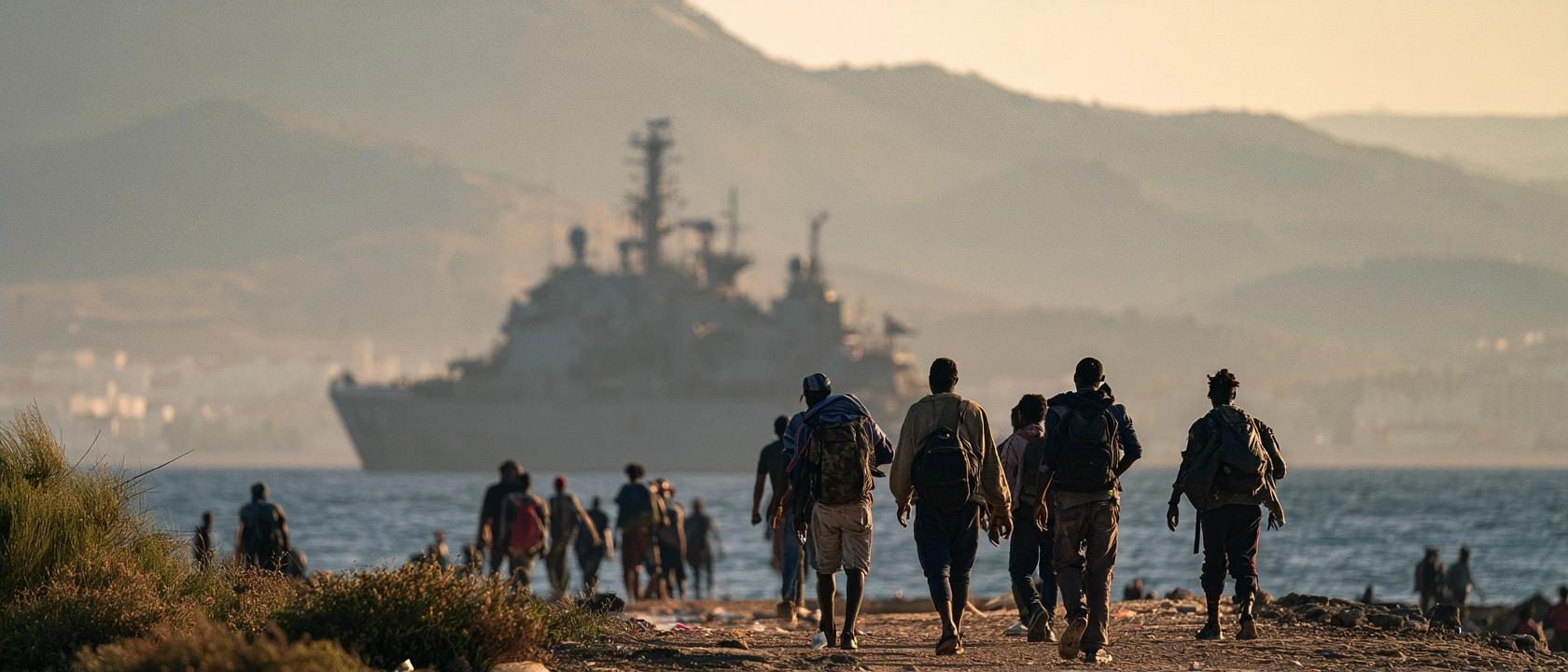
The central question of the crisis is why Moroccan border forces did not stop tens of thousands of people before they reached the water. Rabat's official position: you cannot ask Morocco to use force against its own citizens. A Moroccan spokesperson added that reducing the phenomenon to perimeter security was to completely misunderstand its nature.
Analysts less sympathetic to this framing point to the 2021 precedent. In that earlier crisis, Morocco allowed a large crossing after Spain permitted Polisario Front leader Brahim Ghali to receive medical treatment on Spanish soil — an implicit endorsement of the Western Sahara independence movement that Rabat considers an existential threat. The message was clear: Morocco controls the migration tap, and it will turn it on when it needs leverage over Madrid.
In 2026, the leverage calculus appears similar. Spain is structurally dependent on Moroccan cooperation to control irregular migration across the Strait of Gibraltar and through the Canary Islands route. Rabat knows this. Whether the July surge was the result of deliberate inaction, a temporary breakdown in border management capacity, or some combination of both remains disputed — but the effect is the same: Morocco's negotiating position with both Spain and the EU has been strengthened.
The Human Toll: Deaths, Chaos and the Army
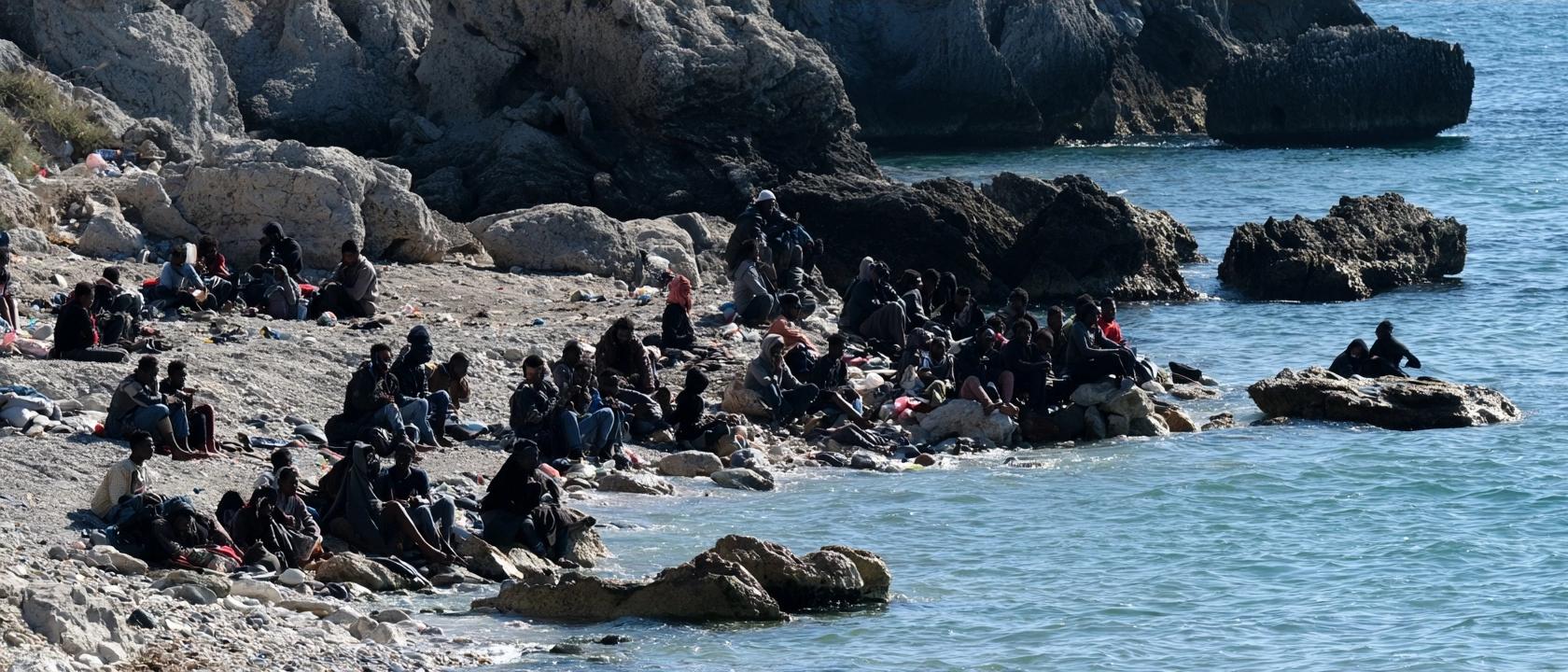
Most of those who attempted the crossing swam around the Tarajal and Benzú breakwaters or entered the water at unguarded stretches of coastline. Others used inflatable dinghies and improvised rafts. Adults and children drowned in the crush and in the current. On the Moroccan side, in the border town of Bni Nsar, crowds clashed with police — throwing rocks, setting police vehicles on fire, injuring officers.
Spanish authorities initially attempted to manage the crisis with Civil Guard forces. The scale of the situation made that impossible. Prime Minister Sánchez flew to Ceuta in person. The city's autonomous government formally requested that Madrid declare a national emergency. Along the stretch of Mediterranean coastline shared between the two territories, Spain installed a 500-metre floating barrier.
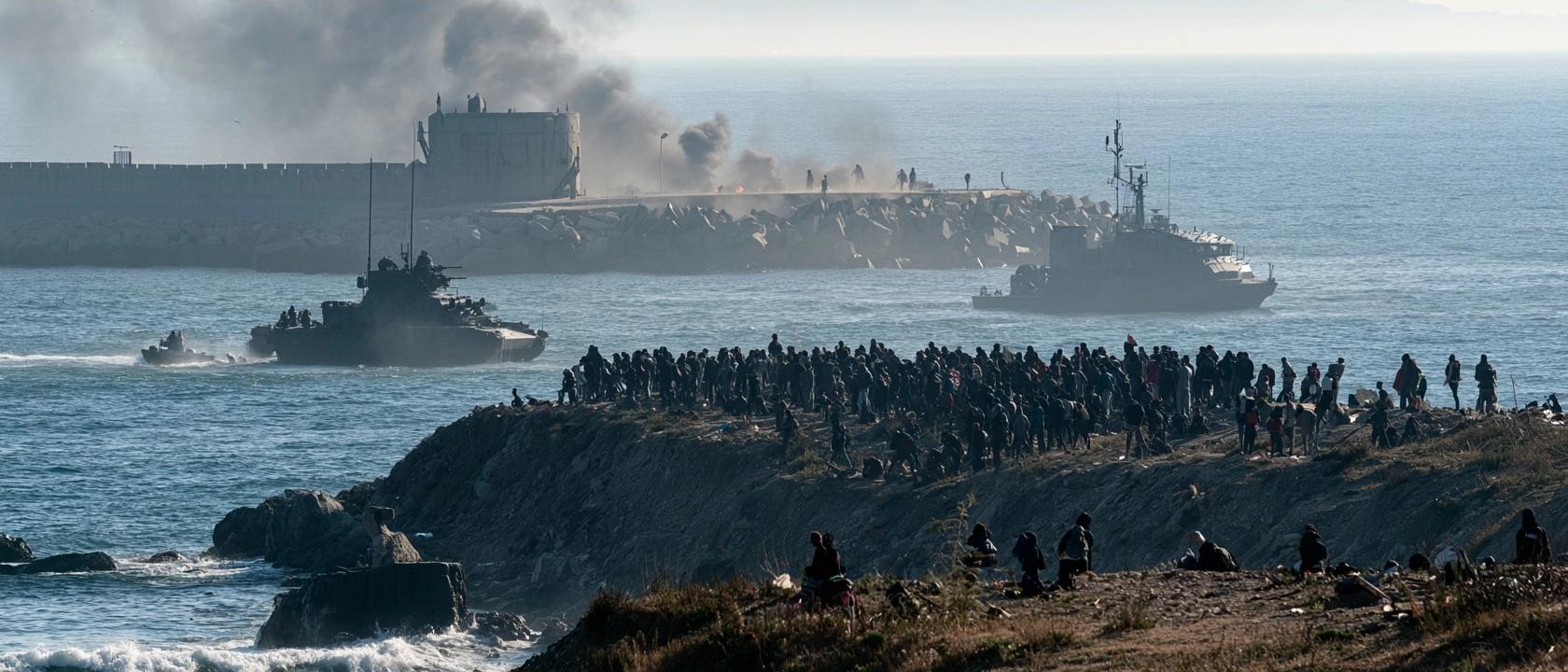
By the first week of August, Spanish authorities had returned approximately 69,500 people to Morocco. Many left voluntarily once it became clear the traffickers' promises had been false — there was no guaranteed pathway to remain in Europe. Others were returned through accelerated procedures that human rights organisations immediately challenged in court, arguing they violated the same Supreme Court ruling that had triggered the crisis in the first place.
Spain versus Its EU Allies: A Union Divided
Pedro Sánchez's response combined firmness on deportations with sharp criticism of his EU partners. He denounced what he called the selfish, polarising and unlawful reaction of other member states — language directed above all at Italy.
Rome's reaction was the most dramatic. Italian Prime Minister Giorgia Meloni described events in Ceuta as a direct threat to national security and, on 1 August 2026, unilaterally suspended the Schengen Agreement with Spain for 30 days, introducing selective passport checks on air and sea routes from Spain to Italy. Meloni also called on the EU to suspend Spain from the Schengen zone — a demand with no legal mechanism to execute it under current EU treaties, but which sent an unmistakably confrontational signal.
France took a softer line: Interior Minister Laurent Nunez ordered enhanced checks along the Franco-Spanish border. In total, 22 EU leaders — including those of Finland, Denmark and Austria — signed a joint statement demanding a fundamental overhaul of Schengen rules. The European Commission convened an emergency meeting of interior ministers.
European Commission President Ursula von der Leyen warned against the use of irregular migration as a tool of political pressure — a transparent reference to Morocco — and firmly rejected Italy's call to suspend Spain from Schengen: our priority is securing our external borders, not punishing member states.
Political Fallout: Far Right Gains, Schengen Under Pressure
The Ceuta crisis accelerated several structural trends that had been building across European politics.
Right-wing and far-right parties moved quickly to capitalise. Spain's Vox called for Sánchez's resignation. Marine Le Pen's Rassemblement National in France described the crisis as the predictable consequence of open-border policy. Germany's AfD and Austria's FPÖ — which by mid-2026 was already participating in a coalition government — backed demands for Schengen reform. Polling across the EU after August recorded modest but consistent gains for right-wing parties, typically in the 2 to 5 percentage point range.
The Schengen Agreement faced its most serious stress test since the 2015–16 migration crisis. Technically, expelling Spain from Schengen is impossible without Spain's consent — EU treaties contain no such procedure. But member states can introduce temporary border controls on national security grounds, and Italy and France did exactly that. The real danger is not Spain's expulsion; it is normalisation of unilateral Schengen opt-outs as a political tool. If that practice becomes routine, one of the European Union's foundational achievements begins to unravel.
Morocco–EU dynamics shifted further in Rabat's favour. The crisis confirmed what Moroccan officials have long known: migration control is strategic leverage. Brussels will now be under pressure to offer Morocco a substantially more generous financial package in exchange for effective border management — echoing the template of the 2016 EU–Turkey migration deal.
The longer-term outlook is not reassuring. Demographic pressure from the south is a structural reality: populations in Sahel and Maghreb countries continue to grow, youth unemployment remains critically high, and climate change is reducing agricultural yields and displacing people from rural areas at an accelerating rate. No floating barrier in the Mediterranean resolves these underlying forces. The Ceuta crisis of 2026 will not be the last of its kind. The question is whether the EU can develop a systemic response before a comparable incident occurs at even greater scale.